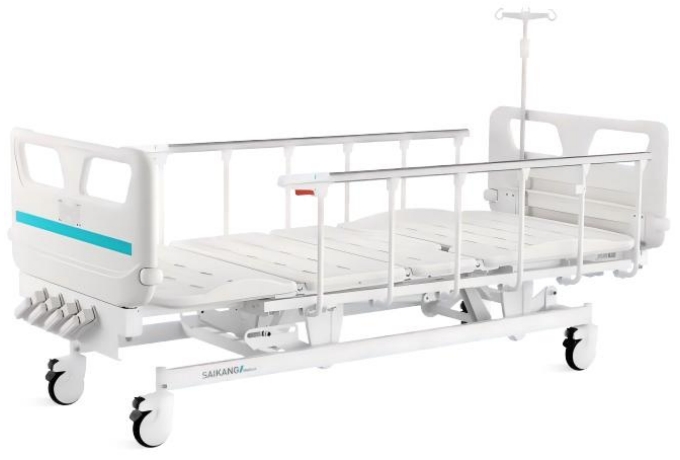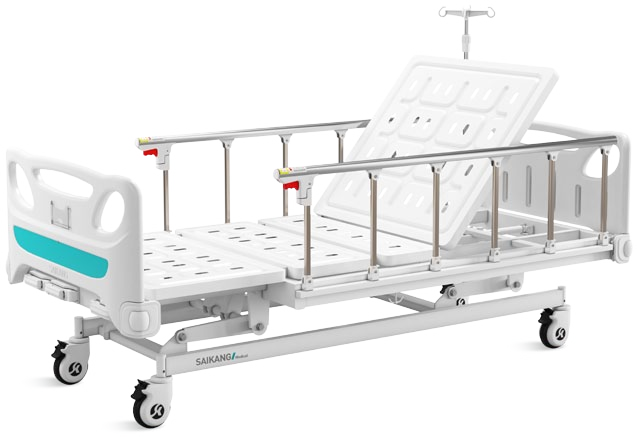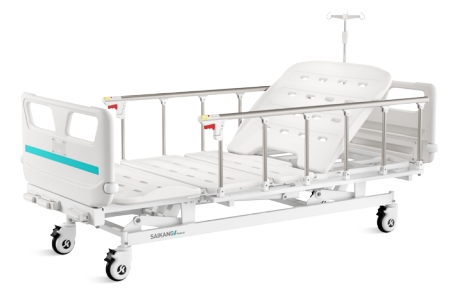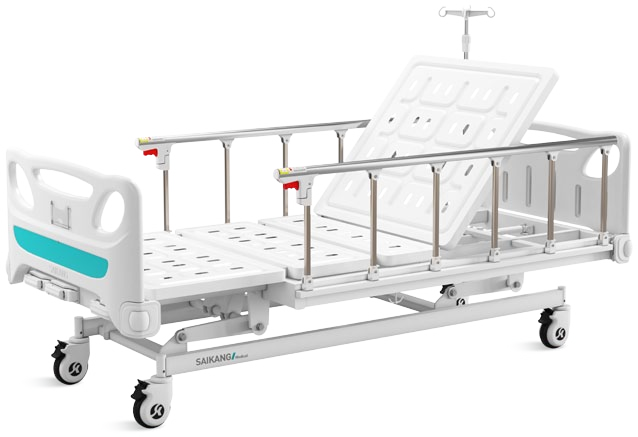
D6d Manual bed(SKD-C)
SaikangMedical
Prix sur demande. Contactez-nous pour une offre.
Comparison Dimension | Hospital Manual Bed Key Advantages |
|---|---|
Procurement Cost | Significantly lower cost. A hospital manual bed typically costs 1/3 to 1/5 of electric models, making it ideal for budget-sensitive healthcare projects, home care, and bulk hospital procurement. |
Power & Environment | Fully independent from electricity. The manual hospital bed can be used in rural hospitals, emergency situations, or areas with unstable power supply without any limitation. |
Reliability & Maintenance | High mechanical reliability with a simple crank system. The hospital manual bed has fewer failure points and requires minimal maintenance throughout its service life. |
Operation Safety | Designed to reduce patient misoperation risk. Adjustment is controlled by caregivers, making the manual hospital bed safer for elderly, unconscious, or post-operative patients. |
Mobility & Weight | Lightweight structure without motor or battery components, making the manual hospital bed easier to move within wards or home care environments. |
Maintenance Cost | Extremely low long-term maintenance cost. Simple mechanical components ensure durability and reduce replacement frequency. |
Suitable Scenarios | Ideal for general wards, short-term recovery, home care, rural healthcare projects, and cost-sensitive hospital procurement. |
Adjustment Experience | Manual crank adjustment may require physical effort but provides stable and predictable positioning for patient care. |
Core Value Positioning | The hospital manual bed focuses on affordability, durability, safety, and independence from electricity, making it a practical solution for essential patient care. |